


  • UN ESCAP - Home
  •  
  • UN ESCAP - Home
  •  
  • UN ESCAP - Decade of Action
  •  
  • RISK AND RESILIENCE PORTAL

    Bridging the science policy gap for informed action

  • Log in
  • Home
  • Risk Atlas
Home Risk Atlas

expand_more Country profiles

    Afghanistan American Samoa Armenia Australia Azerbaijan Bangladesh Bhutan Brunei Darussalam Cambodia China Cook Islands D.P.R. Korea Fiji French Polynesia Georgia Guam India Indonesia Iran (Islamic Republic. of) Japan Kazakhstan Kiribati Kyrgyzstan Lao P.D.R. Malaysia Maldives Marshall Islands Micronesia (F.S) Mongolia Myanmar Naoero Nepal New Caledonia New Zealand Niue Northern Mariana Islands Pakistan Palau Papua New Guinea Philippines Republic of Korea Russian Federation Samoa Singapore Solomon Islands Sri Lanka Tajikistan Thailand Timor-Leste Tonga Türkiye Turkmenistan Tuvalu Uzbekistan Vanuatu Viet Nam

expand_more Decision support systems open_in_browser

    Overview Policy Search Methodology
Risk Atlas

Breadcrumb

  1. Home
  2. Knowledge Products
  3. Manual For Operationalizing Impact-based Forecasting and Warning Services (IBFWS)
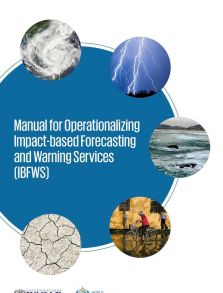
Manual for Operationalizing Impact-based Forecasting and Warning Services (IBFWS)
Category
Manuals and Training Materials

This manual was developed under the project “Operationalizing Impact-based Forecasting and Warning Services (IBFWS)”, to support the capacity of the Viet Nam Meteorological and Hydrological Administration (VNMHA) to provide impact-based forecasting and early warning services. The objective is to introduce impact-based forecasting and the substantive steps for producing an impact-based forecast, with a focus on the local context of Viet Nam. This will be covered over 3 modules in the training manual.

  • Module 1 discusses what impact-based forecasting is, why it is used, and provides examples of successful implementation and use of impact-based forecasting by governments across the world.
  • Module 2 introduces the steps required for producing an impact-based forecast for typhoons.
  • Module 3 guides steps to develop impact outlooks based on anomalies in seasonal forecasts (e.g., lower-than-usual rainfall) which may contribute to the exacerbation of slow-onset disasters such as droughts.
URL : Click to visit the source
Please switch to Chrome or MS Edge to improve your experience.
UNESCAP Logo
© United Nations ESCAP

Additional Links

  • UN Website
  • UN Website locator
  • Privacy Notice
  • Terms of Use
  • Fraud Alert

Get social with us

Newsletter

Subscribe to our monthly email newsletter.