


  • UN ESCAP - Home
  •  
  • UN ESCAP - Home
  •  
  • UN ESCAP - Decade of Action
  •  
  • RISK AND RESILIENCE PORTAL

    Bridging the science policy gap for informed action

  • Log in
  • Home
  • Risk Atlas
Home Risk Atlas

expand_more Country profiles

    Afghanistan American Samoa Armenia Australia Azerbaijan Bangladesh Bhutan Brunei Darussalam Cambodia China Cook Islands D.P.R. Korea Fiji French Polynesia Georgia Guam India Indonesia Iran (Islamic Republic. of) Japan Kazakhstan Kiribati Kyrgyzstan Lao P.D.R. Malaysia Maldives Marshall Islands Micronesia (F.S) Mongolia Myanmar Naoero Nepal New Caledonia New Zealand Niue Northern Mariana Islands Pakistan Palau Papua New Guinea Philippines Republic of Korea Russian Federation Samoa Singapore Solomon Islands Sri Lanka Tajikistan Thailand Timor-Leste Tonga Türkiye Turkmenistan Tuvalu Uzbekistan Vanuatu Viet Nam

expand_more Decision support systems open_in_browser

    Overview Policy Search Methodology
Risk Atlas

Breadcrumb

  1. Home
  2. Knowledge Products
  3. Asia Pacific Disaster Report 2022 For ESCAP Subregions Summary For Policymakers
APDR2022
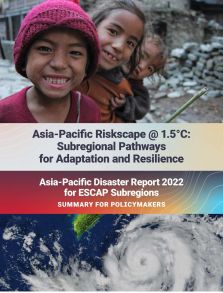
Asia Pacific Disaster Report 2022 for ESCAP Subregions Summary for Policymakers
Category
Report

Asia Pacific Disaster Report 2022 for ESCAP Subregions: Summary for Policymakers builds on ESCAP’s Asia Pacific Disaster Report 2021, Asia and the Pacific SDG Progress Report 2022 and the latest reports (2021/2022) issued by the Intergovernmental Panel on Climate Change (IPCC). IPCC reports show a startling increase in global warming impacts in that, as we move from 1.5 to 2 degrees of warming, the risks to economies and people increase exponentially. It is worth noting that, while the overarching trends in climate change are global, they translate into different warming trends and impacts for each sub-region of Asia and the Pacific. Therefore, all sub-regions require their own risk profiles with sub-regional specificities in order to develop tailor-made resilience pathways to tackle multiple hazards.

URL : Click to visit the source
Please switch to Chrome or MS Edge to improve your experience.
UNESCAP Logo
© United Nations ESCAP

Additional Links

  • UN Website
  • UN Website locator
  • Privacy Notice
  • Terms of Use
  • Fraud Alert

Get social with us

Newsletter

Subscribe to our monthly email newsletter.