  • UN ESCAP - Home
  •  
  • UN ESCAP - Home
  •  
  • UN ESCAP - Decade of Action
  •  
  • RISK AND RESILIENCE PORTAL

    Bridging the science policy gap for informed action

  • Log in
  • Home
  • Risk Atlas expand_more
  • Country Tools & Applications expand_more
  • Regional cooperation expand_more
  • E-learning & Knowledge expand_more
Home

expand_more Risk Atlas

    expand_more Hazard Hotspots

      Climate-related and biological multi-hazard Drought Flood Heatwave Cyclone Earthquake and Tsunami

    expand_more Economic Impact

      Regional Economic Impact East and North-East Asia North and Central Asia Pacific South-East Asia South and South-West Asia Pacific Small Island Developing States

    expand_more Adaptation costs and priorities

      Regional Overview East and North-East Asia North and Central Asia Pacific South-East Asia South and South-West Asia Pacific Small Island Developing States

expand_more Country Tools & Applications

    expand_more Country profiles

      Afghanistan American Samoa Armenia Australia Azerbaijan Bangladesh Bhutan Brunei Darussalam Cambodia China Cook Islands D.P.R. Korea Fiji French Polynesia Georgia Guam India Indonesia Iran (Islamic Republic. of) Japan Kazakhstan Kiribati Kyrgyzstan Lao P.D.R. Malaysia Maldives Marshall Islands Micronesia (F.S) Mongolia Myanmar Nauru Nepal New Caledonia New Zealand Niue Northern Mariana Islands Pakistan Palau Papua New Guinea Philippines Republic of Korea Russian Federation Samoa Singapore Solomon Islands Sri Lanka Tajikistan Thailand Timor-Leste Tonga Türkiye Turkmenistan Tuvalu Uzbekistan Vanuatu Viet Nam
    Decision support systems Risk Atlas Resilience SDG Tracker for disaster and climate resilience

expand_more Regional cooperation

    The Aral Sea catastrophe - Storyboard Shared Borders, Shared Resilience Early Warnings for All

expand_more E-learning & Knowledge

    expand_more E-learning tools

      IBF Course DiDRR Part 1 : Basic DiDRR Part 2 : Advanced
    Knowledge products
Home
Accelerating, Cascading, Expanding
Projected Temperature
Average annual temperature (baseline, SSP2 near-term, SSP2 medium-term)
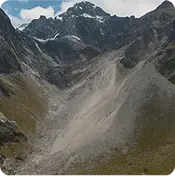
Change in glacier landscape in Central Asia and the impacts
Wind and Water Erosion: Major Drivers of Land Degradation in Central Asia
From Crisis to Capacity, Risk Informed Pathways
Technology as Enabler in Central Asia
Project Goals
Our Partner Organizations
Focus on Slow-onset Glacial Hazards in Central Asia
Mapping Glacial Risk & Glacial Hotspots
Mapping Glacial Risk
Local to Global Linkages
How a Trans–Regional Approach Builds on Seasonal Climate Outlooks Across North Eurasia, South Asia and the Third Pole
Projected Warming and Key Risks
Key Sectoral Findings for Drought
Selected Decision Support System
Scenario-based Adaptation Planning
5 Steps to Embark on Adaptation and Resilience
Pathway for Adaptation and Resilience
Find out more for countries in the Central Asia
Paragraphs
Body
Enhancing Knowledge and Regional Cooperation for Climate Adaptation in Central Asia

Explore how climate change is reshaping Central Asia’s riskscape and livelihoods—and how countries are building resilience through data and planning.

Source: @unsplash.com
Body
Body
Accelerating Climate Stress

Central Asia is warming faster than the global average.

Glacier retreat is rapid, triggering both floods and long-term water scarcity.
Climate Stress Icon 1 Climate Stress Icon 2
Cascading Effects Across Systems

Climate impacts are not isolated: water, food, and energy systems are interdependent.

Transboundary impacts are becoming more frequent and intense.

Cascading Effects Icon 1 Cascading Effects Icon 2
Expanding Environmental Degradation

Desertification, land degradation, and dust storms are worsening.

Rural livelihoods and ecosystems are increasingly at risk.

Expanding Environmental Degradation Icon 1 Expanding Environmental Degradation Icon 2
Body
The Central Asian region will experience a consistent increase in average annual temperature across all climate scenarios, with warming projected to intensify over time, highlighting the region's growing climate stress and the need for adaptive strategies.
Body
Body
Body
Body
Body
From Crisis to Capacity

Central Asia faces recurrent climate-induced crises such as droughts, glacier melt, floods, and dust storms.

Recurrent disasters Disaster icon Warning icon

Cascading transboundary hazards and extreme events pose significant challenges, heightening vulnerabilities for populations and critical sectors.


Down arrow Long-term resilience strategies

Moving from reactive disaster relief to regional cooperation and long-term resilience is critical.

Risk-Informed Pathways

Localized data on glacier hazards, water scarcity, and desertification informs national adaptation plans.

Long-term resilience strategies

Regional collaboration strengthens capacity for impact-based forecasting and early warning systems.

Localized Risk Assessments

Integrating transboundary climate risks data into national strategies supports sustainable development and reduces conflict potential.

Body
Technology as Enabler in Central Asia
AI Icon
AI in Agriculture

Kazakhstan

Satellite data and ML used for crop monitoring and yield estimation

FAO & NASA Harvest, 2022

Visit Page
Hydropower Icon
Climate Risk Analytics for Dams

Tajikistan

Remote sensing and modeling used to assess climate risks at Rogun Dam

FutureWater & World Bank, 2021

Visit Page
Early Warning Icon
Early Warning Systems

Kyrgyzstan

Real-time flood alerts using glacial lake and rainfall monitoring

UNDP, 2025

Visit Page
Scenario Modeling Icon
Scenario Modeling for Climate Planning

Central Asia

CMIP6 projections used in ESCAP's DSS for regional climate planning

ESCAP

Visit Page
Scenario Modeling Icon
Glacial Lake Monitoring (Drones)

Kyrgyzstan

Drones for remote monitoring of GLOF-prone lakes

UNDP, 2023

Visit Page
Scenario Modeling Icon
Remote Sensing for Land Degradation

Central Asia

Satellite mapping of desertification hotspots

UNCCD, 2023

Visit Page
Body
Body
Project Goals

Strengthening the capabilities of Kazakhstan, Kyrgyzstan, and Tajikistan to address the complex and cascading impacts of slow-onset disaster risks on the achievement of the Sustainable Development Goals.

Target 1 Icon
Target 1
Comprehensive national risk assessment & impact-based forecasting of slow-onset disasters (social, economic, gender indicators)
Target 2 Icon
Target 2
Expert dialogue on solutions, policy actions, enabling technologies, approaches to identity knowledge gaps and capacity development
Target 3 Icon
Target 3
Share maps, data, Findings and Scientific analysis on ESCAP RRP (EN & RUS) with actionable information for coherent strategy on slow-onset disasters
Body
Funded by Russian Federation
Our Partner Organizations
EMERCOM EMERCOM
Roshydromet ROSHYDROMET
NEACC NEACC
IGCE IGCE
CESDRR CESDRR
Body

Focus on Slow-onset Glacial Hazards in Central Asia
North and Central Asia, like many regions in the Asia-Pacific, is facing intensified floods, droughts, and heatwaves due to climate change. These disasters pose risks to populations, economies and biodiversity.
Body
Body
Body
Local to Global Linkages
How local glacial hazards ripple across borders and sectors:
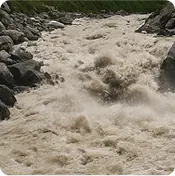
Mountain Hazards (e.g., GLOF)

Mountain Hazards (e.g., GLOF)

Arrow Pointing Right Arrow Pointing Right
Downstream Landslides & Flooding

Downstream Landslides & Flooding

Cascading Impacts:
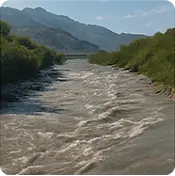
Cross-Border River Impacts
Cross-Border River Impacts

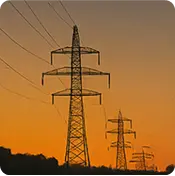
Energy & Food Security Risks

Energy & Food Security Risks

Affected Population & Displacement

Affected Population & Displacement

Body
Body
Body

Click right button to learn about key teleconnections shaping the Third Pole, influencing temperature, precipitation, glacier melt, and river flow.

Learn More
Body
Body
Body
Body
Body
Body
Scenario-based Adaptation Planning

How impact scenarios guide policy and planning
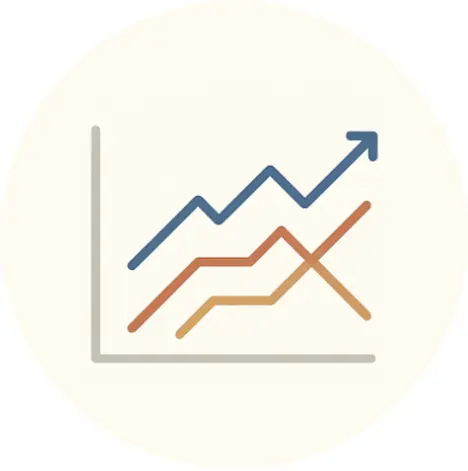
Long-term resilience strategies

Trend Analysis

Localized Risk Assessments

Scenario
Development

Localized Risk Assessments

Implementation &
Monitoring

Body
Body
Pathway for Adaptation and Resilience

Glaciated Mountainous Context

  • Glaciers
    Assessment – its seasonal, sub-seasonal and long-term patterns, spatial variations and scenarios at sub-national/national and regional level.
  • Associated weather and climate systems
    Seasonal outlooks of temperature, precipitation and snow cover – Climate Forum, Impact forecasting and scenarios.
  • Water, Food and Energy systems
    Glacier and snow melt are key components of water flow rivers that contribute to food and energy security.
  • Environment / Ecosystems
    Preserve and manage ecosystems and their biodiversity, land surface changes and human impact.

Body

Find out more for countries in the Central Asia

Kazakhstan Kyrgyzstan Tajikistan Turkmenistan Uzbekistan
Please switch to Chrome or MS Edge to improve your experience.
UNESCAP Logo
© United Nations ESCAP

Additional Links

  • UN Website
  • UN Website locator
  • Privacy Notice
  • Terms of Use
  • Fraud Alert

Get social with us

Newsletter

Subscribe to our monthly email newsletter.